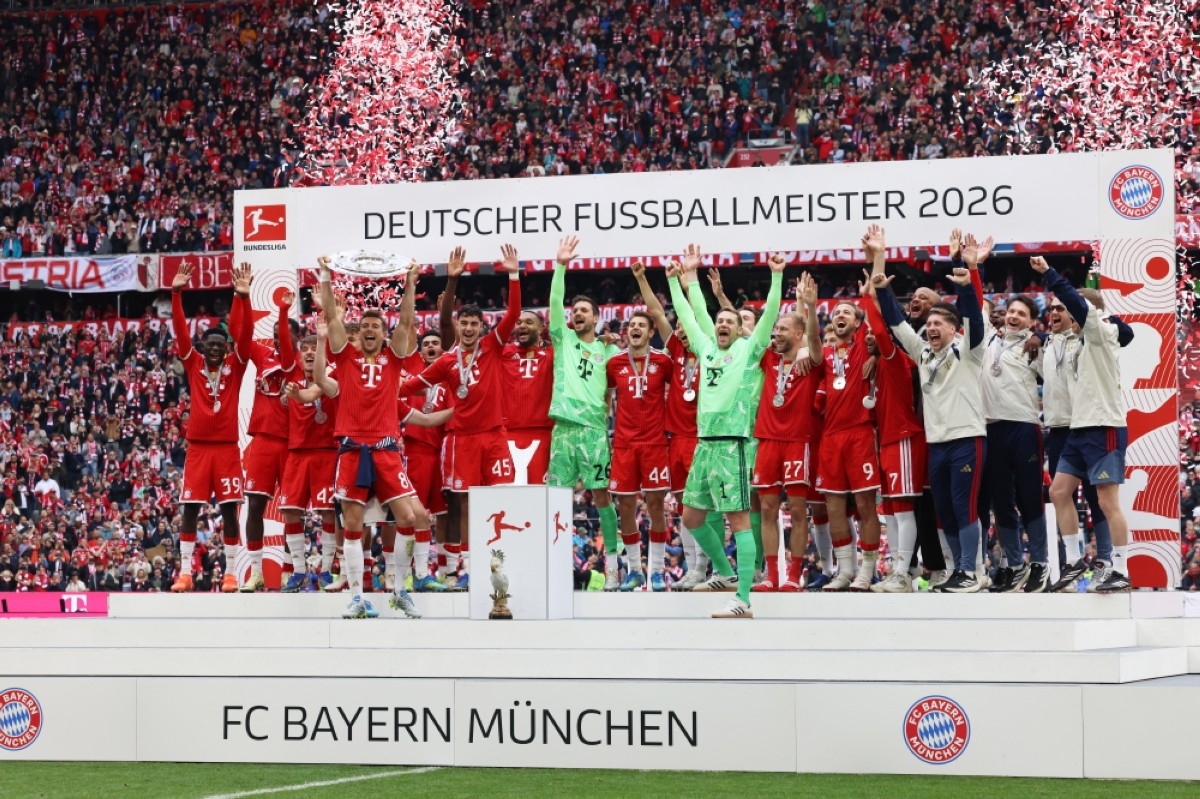
Bayern Munich did not so much win the 2025/26 Bundesliga as dismantle it. Vincent Kompany’s side turned a title race into a procession, combining the most prolific attack the German top flight has ever seen with the kind of defensive control that leaves opponents chasing shadows. By the time the trophy was secured, the only real questions left concerned records, not rivals. This is a look at what underpinned one of the most dominant campaigns in modern German football.
A Title Wrapped Up Early
The destination was never really in doubt, and the confirmation came with plenty of road still to travel. Bayern sealed the championship on 19 April 2026, with four matches to spare, after coming from behind to beat VfB Stuttgart 4–2 on Matchday 30. It was the 34th time the club had been crowned Bundesliga champions, and their 35th German title overall.
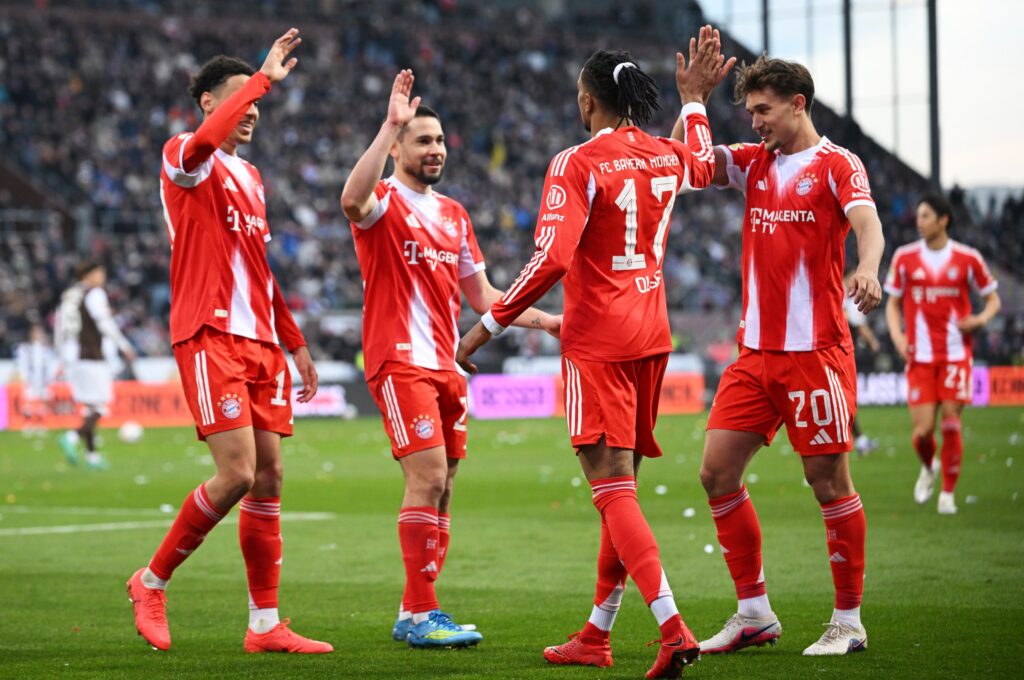
The win itself was a microcosm of the season. Bayern fell behind early through a Stuttgart strike, then answered with three goals in six minutes from Raphaël Guerreiro, Nicolas Jackson and Alphonso Davies before Harry Kane came off the bench to add a fourth. Even on an afternoon when they were rattled, the champions simply carried too much firepower for the contest to stay competitive for long.
A Blistering Start That Set the Tone
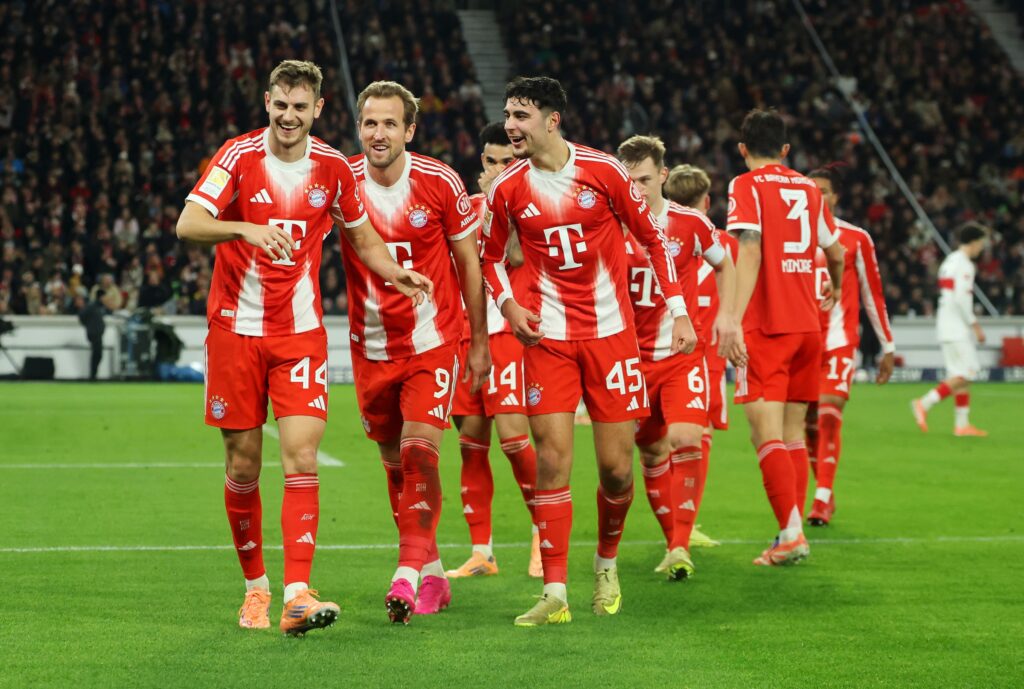
The foundation was laid in the opening weeks. Bayern won their first nine league matches in a row, part of a run of 16 consecutive competitive victories to open the season across all competitions, a record among teams past or present in Europe’s top five leagues. That streak finally ended with a draw away at Union Berlin on 8 November 2025.
By the winter break the league was effectively a one-horse race. Bayern sat nine points clear at the top, having posted the best 15-match start in Bundesliga history with 13 wins, two draws and 41 points, a goal difference of plus 44, and 55 goals scored against just 11 conceded. When a side builds that kind of cushion before Christmas, the second half of the season becomes a matter of maintenance rather than pursuit.
An Attack That Rewrote the Record Books
Even by Bayern’s standards, the scoring was extraordinary. The club’s old Bundesliga single-season record of 101 goals had stood since 1971–72, and this team erased it with five matches still left to play, before pushing the new mark all the way to 122 goals by the final whistle of the campaign.
To put that in perspective, you have to look beyond Germany. Across the history of Europe’s top five leagues, only one side has ever scored more in a single season: Torino, who managed 125 in 1947–48, in a campaign that ran six matches longer than Bayern’s. The same is true of their scoring rate. Bayern averaged 3.59 goals per match, a figure bettered only by Athletic Bilbao’s 4.06 per game back in 1930–31. In an era of organised, well-drilled defences, sustaining numbers like that over a full season borders on the absurd.
Harry Kane Leads a Shared Scoring Burden
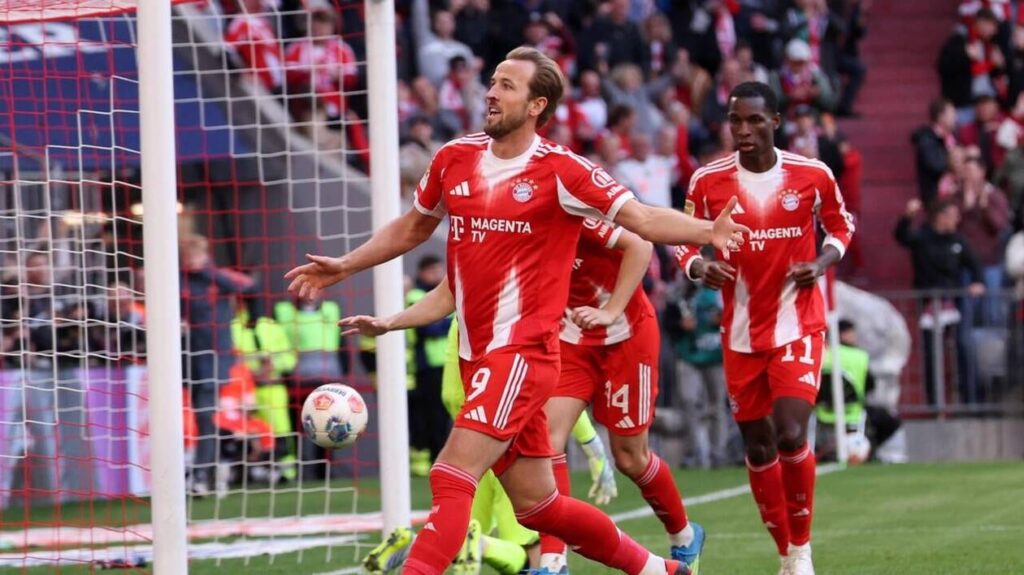
At the centre of the attack was Harry Kane, who finished as the Bundesliga’s top scorer with 36 league goals and 61 across all competitions. He scored three hat-tricks in the league, against Leipzig, Hoffenheim and Stuttgart, and converted all ten of the penalties he took. The England captain has now translated his goalscoring into silverware, the criticism that once trailed him having long since faded.
What separated this Bayern from a one-man team was the spread of contributions around him. Michael Olise, Nicolas Jackson, Jamal Musiala, Leon Goretzka, Luis Díaz and the departing Raphaël Guerreiro all chipped in, and the 8–1 demolition of Wolfsburg in January, Bayern’s biggest win of the season, showcased an attack that could overwhelm opponents from multiple angles. A total of 122 league goals is not the work of a single forward; it is the product of a whole team that treated every fixture as a chance to keep scoring.
Defensive Control Behind the Firepower
The headlines belonged to the forwards, but the title was built on balance. Bayern lost only one Bundesliga match all season, at home to Augsburg in January, and kept 11 league clean sheets. The early-season figures told the same story: the most potent attack and the meanest defence in the division at the same time. Sides that win leagues at a canter almost always combine the two, and Bayern were rarely forced into shootouts because they conceded so little.
Kompany’s Imprint on a Rejuvenated Bayern
The man tying it together was Vincent Kompany. The Belgian arrived in the summer of 2024 with Bayern in need of renewal, their run of 11 successive titles having been ended by Bayer Leverkusen’s unbeaten 2023/24 season. Kompany delivered the title in his first campaign and retained it in his second, becoming only the fourth coach, after Pep Guardiola, Hansi Flick and Ernst Happel, to win the Bundesliga in each of his first two seasons in charge. His points-per-game average of 2.5 sits level with the Guardiola and Flick eras at the club.
Notably, he did not achieve this by leaning solely on established stars. Kompany handed Bundesliga debuts to nine academy graduates across the season, blending youth into a record-breaking machine without disrupting its rhythm.
More Than a Domestic Title
The league was only part of the story. Bayern also lifted the Franz Beckenbauer Supercup and won the DFB-Pokal to complete a domestic double, while reaching the semi-finals of the UEFA Champions League. The treble dream ultimately fell short, but a season delivering two domestic trophies and a place among the last four in Europe underlines how comprehensively Kompany’s side reasserted Bayern’s dominance.
In the end, the 2025/26 Bundesliga title was secured not by a single decisive moment but by relentlessness, from the first whistle in August to a goals record that may stand for years. Bayern were quicker out of the blocks, more ruthless in front of goal, and more solid at the back than anyone else, and the numbers leave little room for argument.